New Development is a guide to the protections that come with buying a new home, or a home in a new development, in each Australian state and territory, written and published by Dotto. It covers the statutory warranties the law writes into building work, and each place’s home warranty scheme under the name its own government uses.
General informationGeneral information, not legal, insurance or financial advice about any home, contract or claim. Each scheme’s own pages, listed at the foot of every page, are the place to check what applies: icare in NSW, the Building and Plumbing Commission in Victoria and the QBCC in Queensland, among others.
1Eight places, eight names
No two places call their scheme the same thing, and a search for the wrong name finds the wrong rules. These are the names each government uses.
- New South Wales
Home Building Compensation Fund (HBCF), once known as home warranty insurance. Most residential building work worth over $20,000 needs it by law, unless an exemption covers the job.
- Victoria
Home Warranty, from the Building and Plumbing Commission, for eligible work under contracts signed on or after 1 July 2026. Before that, Domestic Building Insurance (DBI).
- Queensland
The Queensland Home Warranty Scheme, the name its regulation gives it, administered by the QBCC for most residential building work valued at more than $3,300, materials, labour and GST included.
- Western Australia
Home indemnity insurance (HII), which the Home Building Contracts Act 1991 requires for residential building work valued over $20,000.
- South Australia
Building indemnity insurance, under the Building Work Contractors Act 1995, where domestic building work needs council approval and its cost is $20,000 or more.
- ACT
Residential building work insurance, from an authorised insurer or an approved fidelity fund scheme.
- Northern Territory
Residential building insurance, set by the Building Act, with a fidelity fund certificate for residential building work since 2013.
- Tasmania
No insurance scheme is named on Building Standards Tasmania’s consumer page; it sets out the statutory warranties in every residential building work contract, which last six years from practical completion.
2Two layers, not one
The warranty and the insurance do different jobs. The warranty is the builder’s promise, and the builder stays answerable for it. Western Australia’s fact sheet says the insurance does not reduce a builder’s liability during the six-year period, and comes into play only when a relevant circumstance exists, such as the builder’s death, disappearance or insolvency.
Some schemes are a last resort. icare describes HBCF as designed to step in only when a licensed builder or tradesperson can no longer meet their legal responsibilities and nothing else is left. The Commission says Victoria’s Home Warranty may reach further than DBI did: its help does not hang on the builder having died, disappeared or gone insolvent.
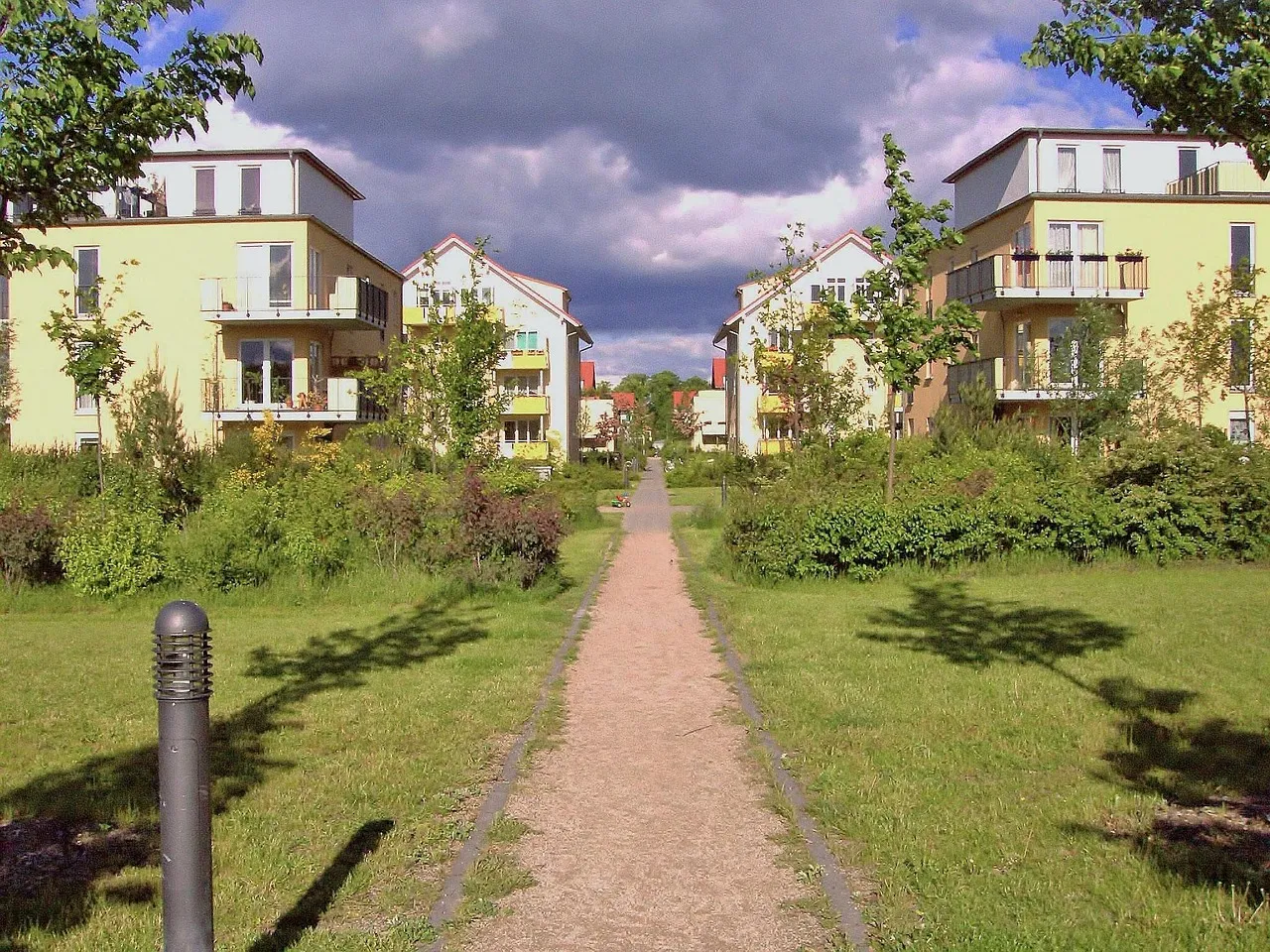
And most stop somewhere. Five places draw a line at three storeys, Victoria only for buildings with more than 2 homes, which is why the street above has a dashed line across it, and why one guide is given to the limits alone.
3The street
Each guide is one building on the street, numbered as it stands.
- Statutory warranties on a new home, state by stateThe promises the law writes into a building contract, how long each state keeps them, and the day the clock starts.
- Three-storey limits: where home warranty cover stopsHow NSW, Victoria, Queensland, the ACT and the NT count storeys, car parks and wings, and what reaches the taller buildings instead.
- Buying a recently built home: the cover that comes with itWhat passes from the first owner to the next, and the certificate, search or statement each state points a buyer to.
- Home Warranty in Victoria: BPC cover and older DBIWhich scheme a Victorian home sits under, what Home Warranty can pay for, and the Notice of Cover a buyer can ask about.
- ACT residential building insurance and developer licencesThe warranty in every ACT contract to sell a new home, the insurance or fidelity certificate behind it, and the developer licence.